

If everyone agrees in the team meeting but says something completely different in the hallway, you don't have a team. You have a group of people sitting at the same table.
I've worked on management teams since 2015 (and with management teams since 2020 as a team coach and facilitator), and I'll tell you something you rarely hear at a conference: most “teams” in Polish companies aren't really teams.
They're groups of competent people who meet once a week, make “decisions,” crack a few jokes, say how great it is to work in “harmony” and go back to their silos.
Many companies in Poland call groups teams. It's possible with a group too – there's rivalry and proving who can do more and better, and that approach will also deliver results “somehow.” A group can also “hit” its financial KPIs...
Except then a CEO calls me and asks: “Piotr, why are we growing but creaking so much, with so much tension?”
The answer is usually the same: because you don't have a team. You have a facade of a team. And until you call it what it is, every new initiative – a new strategy, a reorganization, another offsite at a hotel outside the city – will just be an expensive way of avoiding the real problem.
What a real team is – a definition that hurts
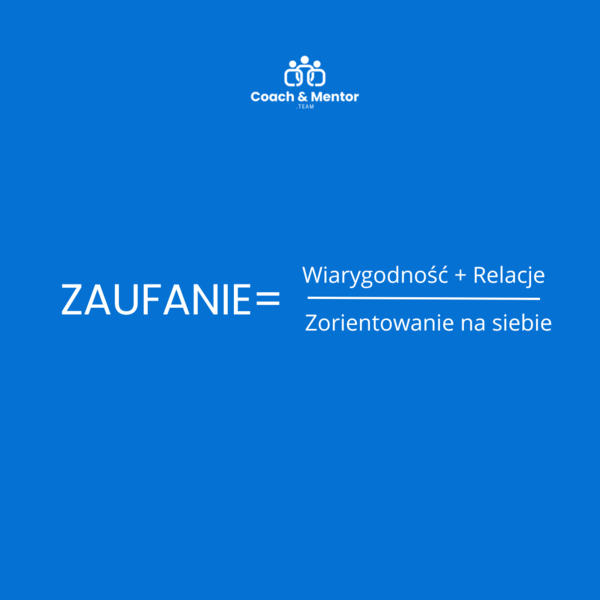
A real team is a group of people who, together with their leader, have made a serious decision to become a team. It doesn't happen by itself. They've agreed to be mutually accountable for a shared result and can tell each other the truth, even when it hurts. This isn't my invention – it's the conclusion of decades of research, from Patrick Lencioni's work to a systematic review of research on psychological safety in teams (O'Donovan & McAuliffe, 2020), which shows in black and white: without psychological safety, there is no team. There's only an organizational structure.
Notice two words in this definition: “mutually” and “truth.” Mutually means it's not just the CEO holding directors accountable – the CFO cares how the COO is doing, and HR tells sales when its behavior is hurting the culture.
Everyone tells the TRUTH – not the safe version, not the political version, not the “I don't want to upset him because we go skiing together” version.
The problem is that psychological safety doesn't come from announcing “from today on, we're open.” It comes when the leader is the first to take off the mask. And that's the hardest part of the whole puzzle – because it requires the person at the very top to do something their whole career has taught them to avoid: showing that they don't know, that they're afraid, that they were wrong.
Three tests that show whether you have a team or a facade
Test one: conflict. In a real team, substantive conflict is an everyday thing – people argue about ideas, not about who's right or who's better. In a facade team, there's artificial harmony, and the real disagreements happen in the hallways or in people's heads. If your team meetings are “polite,” you have a problem. Politeness at the management-team level costs millions, because decisions that should be settled at the table get delayed, watered down and quietly sabotaged. Because everyone is in survival mode and will paint the grass green for you, exactly the way you want to see it.
Test two: accountability. In a real team, members hold each other accountable – they don't wait for the CEO to do it. In a facade team, everyone tends their own patch, and when something goes wrong, you hear “not my department – I delivered.” If accountability always falls on one person, you don't have a team – you have an orchestra without a conductor. What's more, if you as CEO are the only one enforcing standards, your managers have learned to play on your exhaustion.
Test three: the truth about yourself. In a real team, people can say “I don't know,” “I can't,” “I was wrong,” “I need help.” In a facade team, everyone is an expert on everything and nobody admits weakness. This test is the hardest – and it always starts with the leader. Because if you don't say out loud in the first meeting “I was wrong about this” or “I have no idea how to solve this,” nobody will do it after you.
Why the leader is the first piece of the puzzle
This is a risky moment for my business – at this point in the conversation I lose half my “leads.”
Because every CEO and every HR director would rather hear that the problem is “in the team,” not in them. The brutal truth, though, is that the leader embodies the symptoms they see in the team.
If your team wears masks, you were the first to wear one.
If your team avoids difficult conversations, you were the first to avoid them.
If your team runs on a facade of agreement, you were the first to tolerate it, because deep down you're afraid of confrontation.
Let me put it another way, because it matters: the team is the leader's mirror. Not metaphorically – quite literally. Communication patterns, the level of trust, the willingness to say hard things – it all comes from the top.
That's why in the “Peace – Mission – Power” program we never start with a team workshop. We start with one-on-one work with the leader. Because without that work, every team session will be expensive theater in which directors pretend to be open and then breathe a sigh of relief once they leave the room.
A real team is a process, not an event
There's no “team-building workshop” or “training” that will turn your managers into a team. There's no one-day team-building event that will build trust.
A real team forms through a process – lasting at least several months – in which people, step by step, discover the truth about each other (session one), confront what they've discovered, which often shakes things up (session two), bring conflicts and often deep, difficult issues into the open (session three), and then come together again as something new: a TEAM (session four).
That's why our team program includes at least three full days over three or four consecutive months – because leaving the process in the breakdown phase is worse than never starting it.
The results I see in clients after a process like this are measurable: team trust up by about 40%, a sense of teamwork up by about 50%, and, following from that, business results nobody could unlock before.
Why bother? Why go through all this at all?
Because, look – you can work as a group too. Most companies in Poland operate in “group” mode. Individualistically. And somehow they work. Somehow they deliver results.
But let me tell you something – from 20 years of managing people. From the perspective of someone who has led thousands of employees organized into real teams like these.
Working in a team is simply different – more interesting and safer. And it gives the team and the leader a lot more fun!
First
it's less lonely. In a team, you're not alone. You know you have people who are with you. Who'll notice when you're having a bad day. Who'll follow you because they know you'll follow them.
Second
there's more pride. Because a team win tastes different from an individual one. Ask athletes who've won a world championship as a team. Each of them will tell you that medal weighs more than all their individual honors combined.
Third
it's smarter. Because a team makes better decisions than an individual. Statistically. Scientifically proven. On one condition – that the people on the team always tell each other and the leader the whole truth.
And fourth – maybe most important – you grow faster. Because the people around you see things you don't. And if you've agreed to be honest with each other, they'll tell you. Your blind spots. Your patterns. What's holding you back.
In a team, the rivalry is over: who's higher, who has more, whose numbers are green and whose are red. All that counts is the big, shared result.
Wrap-up
Being a real team isn't about chemistry, liking each other or going on retreats together. It's about courage – the courage to tell the truth, to hold each other accountable and to take off the mask.
And that courage always starts with one person at the table. Usually the one sitting at the head of it.
If you're reading this and feel your team is more of a group than a team, let's talk. The first conversation is free and to the point, like everything we do.